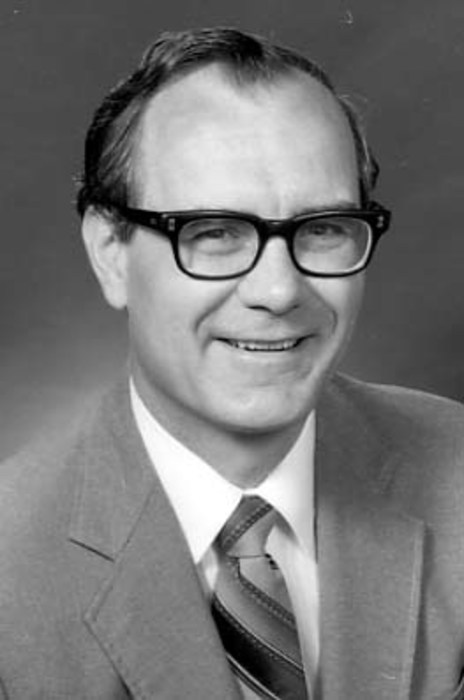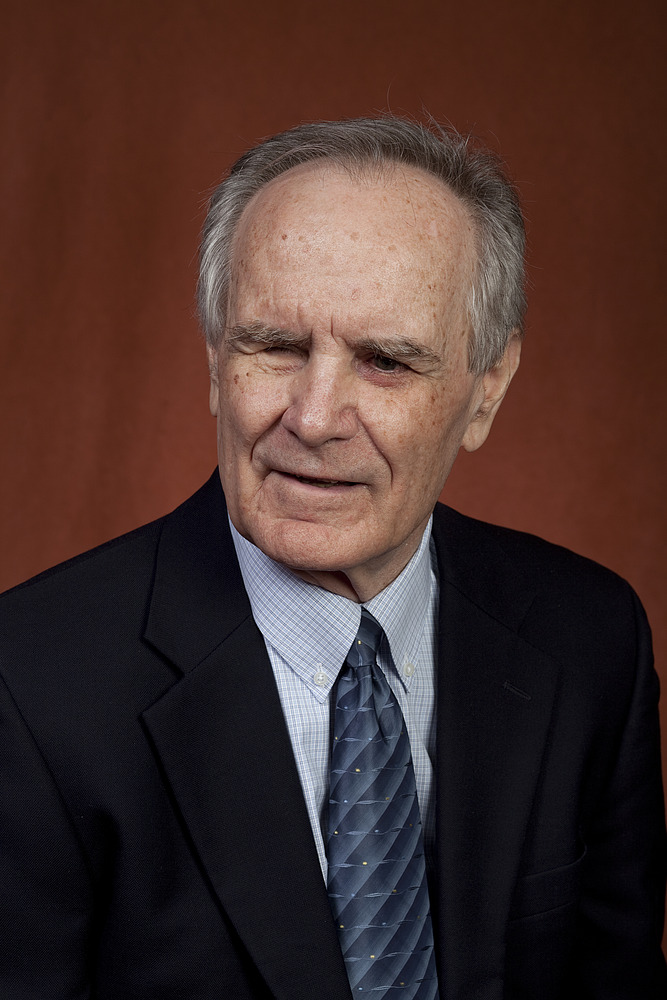
American economist, educator, and one of the world’s leading scholars on economic institutions and economic development.
Throughout a career spanning more than five decades, Jim influenced generations of students, educators, researchers, and policymakers through his teaching, textbooks, and scholarly research. His work with the Economic Freedom of the World index helped shape modern empirical research on the relationship between economic institutions and human flourishing, while his commitment to economic education made complex economic ideas accessible to millions of students and readers around the world.
Gwartney earned his B.A. in Economics from Ottawa University in 1962 and his Ph.D. in Economics from the University of Washington in 1969. Shortly thereafter, he joined the faculty at Florida State University (FSU), where he taught economics for 54 years before retiring in 2022. During his career at FSU he served as Director of the Gus A. Stavros Center for the Advancement of Free Enterprise and Economic Education (2003–2016) and later held the Gus A. Stavros Eminent Scholar Chair. He also served as Chief Economist of the Joint Economic Committee of the U.S. Congress (1999–2000), President of the Association of Private Enterprise Education (1998), and President of the Southern Economic Association (2007–2008). After retiring from FSU, he was honored with the distinguished title of Professor Emeritus of the FSU Department of Economics.
Among Jim Gwartney’s most enduring accomplishments was his leadership in developing the Economic Freedom of the World (EFW) index.
The inaugural report, Economic Freedom of the World: 1975–1995, was published in 1996 following a series of international conferences convened by the Fraser Institute and sponsored by Liberty Fund. Beginning in 1997, the report became an annual publication. Today, the EFW index is one of the world’s leading measures of economic freedom and is used extensively in scholarly research on economic growth, entrepreneurship, poverty reduction, and other measures of human well-being.
Gwartney’s scholarly contributions extended well beyond the EFW project. He authored dozens of peer-reviewed journal articles and book chapters on economic freedom, public choice economics, economic development, constitutional political economy, and comparative institutions. His research appeared in leading journals including the American Economic Review, Journal of Political Economy, Southern Economic Journal, European Journal of Political Economy, and the Journal of Institutional and Theoretical Economics. His work helped establish economic freedom as an important field of empirical inquiry and continues to influence research in the field across the globe.
Equally significant was Gwartney’s profound impact on the field of economic education. His textbook Economics: Private and Public Choice, first published in 1976, became one of the most influential principles of economics textbooks of the modern era. By integrating public choice theory into introductory and principles level economics, the text encouraged students not only to understand how markets function, but also to analyze the political process and government decision-making using the same economic principles. While other textbooks only discussed “market failure,” Jim revolutionized the principles of economics textbook industry by introducing students to “government failure” as well. Now in its eighteenth edition, the textbook has been used by professors at hundreds of colleges and universities and translated into multiple languages.
Gwartney also served as lead author of Common Sense Economics: What Everyone Should Know About Wealth and Prosperity, a book written to explain fundamental economic principles in clear, accessible language for a broad audience. The book has been translated into at least 33 languages and the Common Sense Economics (CSE) project has expanded into an international educational initiative including curriculum materials and teacher workshops that have introduced countless students and educators to the principles of economic reasoning. The book is now in its fourth edition.
Throughout his career, Professor Gwartney remained deeply committed to mentoring students and encouraging the next generation of economists. He supervised numerous graduate students and inspired countless undergraduate students to major in and pursue careers in economics. Colleagues and former students consistently speak not only of his intellect and remarkable memory, but also of his humility, generosity, patience, cheerful spirit, and willingness to invest his time in others.
One of the most remarkable aspects of Dr. Gwartney’s career was that many of his greatest scholarly accomplishments occurred after he became completely blind due to glaucoma. Despite losing his eyesight, he continued teaching, conducting research, writing books and journal articles, traveling internationally, delivering conference presentations entirely from memory, and leading major scholarly projects. His remarkable productivity, resilience, and unwavering optimism became an inspiration to everyone who knew him.
Gwartney married Amy Jean Minichon August 12, 1962, shortly after graduating from Ottawa University. Together they shared more than 61 years of marriage and raised four sons: Scott, Dave, Mark, and J.R. Amy was a constant source of encouragement throughout his career and faithfully supported him during the years following the loss of his eyesight, accompanying him on many of his professional travels and conferences. Together they were widely known for their Christian faith, hospitality, and generosity, welcoming students, colleagues, and friends into their home for decades.
In recognition of his contributions, Gwartney received numerous professional honors, including an honorary doctorate from Universidad Francisco Marroquín and the Association of Private Enterprise Education’s Adam Smith Award, Distinguished Scholar Award, and Clark-Kent-Aronoff Service Award. In 2018, his alma mater Ottawa University established the Gwartney Institute for Freedom, Justice, and Human Flourishing in his honor, further recognizing his lifelong commitment to advancing economic freedom and human flourishing.
James David Gwartney was born on September 28, 1940, in Leavenworth, Kansas, and passed away from pancreatic cancer on January 7, 2024, in Tallahassee, Florida. Jim’s influence continues to extend far beyond his lifetime. Through his scholarship, textbooks, mentorship, and leadership, he fundamentally shaped the fields of economic freedom and economic education. His work continues to inform public policy, academic research, and economics instruction throughout the world, while those who knew him personally remember him just as much for his kindness, Christian faith, integrity, and joyful spirit as for his extraordinary scholarly work and professional accomplishments.